• Skip to primary navigation
  • Skip to main content
  • Skip to primary sidebar

KBS LTER

Kellogg Biological Station | Long-Term Ecological Research

  • Follow us on instagram
  • Follow us on bluesky
  • Open the Aglog
  • view current local weather
  • Home
  • ABOUT
    • KBS LTER PROGRAM
    • PROJECT HISTORY
    • LEADERSHIP
    • PEOPLE
    • LTER NETWORK
    • IN THE NEWS
  • RESEARCH
    • RESARCH AT KBS LTER
    • LONG-TERM EXPERIMENTS
    • SITE DESCRIPTION AND MAPS
      • LAND ACKNOWLEDGEMENT
      • SITE DESCRIPTION
      • SITE HISTORY
      • SOIL DESCRIPTION
      • PLOT LAYOUTS
      • THEMATIC MAPS
    • PUBLICATIONS
      • ALL PUBLICATIONS
      • PUBLICATIONS BY EXPERIMENT
      • DISSERTATIONS only
      • SYNTHESIS BOOK only
      • SPECIAL PUBLICATIONS
      • PUBLICATION DATASETS
  • DATA
    • DATA CATALOG
    • RESEARCH PROTOCOLS
    • AIRPHOTOS
    • SATELLITE IMAGERY
    • GIS DATA
    • TERMS OF USE
    • DATA SUBMISSION GUIDELINES
  • WORK WITH US
    • CONDUCTING RESEARCH
      • RESEARCH FACILITIES
      • ASSOCIATED PROJECTS
    • COLLABORATE
    • GRAD OPPORTUNITIES & FUNDING
    • NEW RESEARCHERS AND STUDENTS
    • ACKNOWLEDGEMENTS
    • JOB OPENINGS
  • PUBLIC PROGRAMS
    • K-12 PARTNERSHIP
    • DATA NUGGETS
    • MiSTRIPS
    • ARTISTS-IN-RESIDENCE
    • FIELD TRIPS AND TOURS
    • RESOURCES
  • PHOTOS
  • BLOG
  • CONTACT US

environment

Scaling-up conservation practices: How much can farmers afford?

1.3.22

Prairie strip in the MSCE

East Lansing, MI – Prairie strips planted into row crops have the potential to contribute a suite of ecosystem services, such as improved soil health, water quality, and wildlife habitat. When it comes to implementation, farmers have to weigh these environmental benefits as well as the economic cost of taking land out of production. In a new study, released online by Land Economics, Michigan State University (MSU) researchers find that 20% of corn and soybean farmers in the Eastern Corn Belt are willing to convert 5% of their largest corn-soybean fields to prairie strips if paid the same

Continue reading Scaling-up conservation practices: How much can farmers afford?

KBS LTER scientist interviewed following Gov. Synder’s visit to KBS
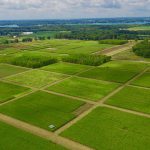
11.28.12

aerial view of the MCSE research plots looking west.

KBS LTER scientist Steve Hamilton was interviewed after Michigan's Governor Rick Synder visited the Kellogg Biological Station today to address the state on energy and the environment "Gov. Rick Snyder's speech on energy and the environment was on the "net positive side of the ledger" and "overall good" according to Steve Hamilton, a professor of aquatic ecology at Michigan State University's Kellogg Biological Station in Hickory Corners. Snyder delivered his address on energy and the environment Wednesday morning at the biological station, laying out how he wants the state to move with its

Continue reading KBS LTER scientist interviewed following Gov. Synder’s visit to KBS

Sidebar

Recent News and Events

  • KBS LTER scientists use machine learning to improve prediction of US cropland nitrous oxide emissions
  • Undergraduate and graduate KBS researchers show how climate warming may be a boon for native goldenrod
  • Graduate research from the KBS LTER reveals plant traits that predict ecosystem stability
  • Farmscapes to Forests: An evening with KBS LTER’s 2025 Artists-in-Residence
  • RET Melissa Frost to visit Konza LTER in cross-site synthesis effort

Blog Categories

  • Education and Outreach News
  • Events
  • Research News

Copyright © 2026 Michigan State University Board of Trustees | East Lansing, MI | 48824

  • LEGAL
  • MSU HOME
  • SITEMAP
  • RSS
  • EMAIL