Skip to content

KBS LTER

Kellogg Biological Station | Long-Term Ecological Research

  • Follow us on instagram
  • Follow us on bluesky
  • Open the Aglog
  • view current local weather
  • Home
  • ABOUT
    • KBS LTER PROGRAM
    • PROJECT HISTORY
    • LEADERSHIP
    • PEOPLE
    • LTER NETWORK
    • IN THE NEWS
  • RESEARCH
    • RESEARCH HIGHLIGHTS
      • LANDSCAPE DIVERSITY
      • SOIL MICROBES
      • CLIMATE CHANGE
      • AGRONOMY
      • PLANT DYNAMICS
      • INSECT DYNAMICS
      • ECOSYSTEM SERVICES
    • LONG-TERM EXPERIMENTS
    • SITE DESCRIPTION AND MAPS
      • LAND ACKNOWLEDGEMENT
      • SITE DESCRIPTION
      • SITE HISTORY
      • SOIL DESCRIPTION
      • PLOT LAYOUTS
      • THEMATIC MAPS
    • PUBLICATIONS
      • ALL PUBLICATIONS
      • PUBLICATIONS BY EXPERIMENT
      • DISSERTATIONS only
      • SYNTHESIS BOOK only
      • SPECIAL PUBLICATIONS
      • PUBLICATION DATASETS
      • LTER MEETING ABSTRACTS
  • DATA
    • DATA CATALOG
    • RESEARCH PROTOCOLS
    • AIRPHOTOS
    • SATELLITE IMAGERY
    • GIS DATA
    • TERMS OF USE
    • DATA SUBMISSION GUIDELINES
  • WORK WITH US
    • CONDUCTING RESEARCH
      • RESEARCH FACILITIES
      • SITE USE POLICY/FORMS
      • ASSOCIATED PROJECTS
    • COLLABORATE
    • GRAD OPPORTUNITIES & FUNDING
    • NEW RESEARCHERS AND STUDENTS
    • ACKNOWLEDGEMENTS
    • JOB OPENINGS
  • PUBLIC PROGRAMS
    • K-12 PARTNERSHIP
    • DATA NUGGETS
    • MiSTRIPS
    • ARTISTS-IN-RESIDENCE
    • FIELD TRIPS AND TOURS
    • RESOURCES
  • PHOTOS
  • BLOG
  • CONTACT US

KBS grad student earn awards for national energy research for harnessing soil microbes

3.23.26

Brandon Kristy, a Ph.D. student in the Department of Integrative Biology and a member of the Evans Lab at the Kellogg Biological Station, will go to Lawrence Livermore National Laboratory, or LLNL, to study the "unseen" partners of sustainable bioenergy.Kristy’s specialty is plant science for sustainable bioenergy, where he investigates how soil microbiomes can help crops like switchgrass thrive without relying on excessive chemical fertilizers. Kristy's work underscores how MSU graduate students are leveraging national resources to turn fundamental scientific inquiry into real-world s

Continue reading KBS grad student earn awards for national energy research for harnessing soil microbes

Prairie strip ecology, art, and advocacy in the LTER: Reflections from an LTER Fellow

2.23.22

Corinn Rutkoski is a graduate student in Sarah Evan's lab at the Kellogg Biological Station. She is broadly interested in the use of perennials in agricultural systems, science policy, and soil health. Her research path has been propelled by a reciprocal inspiration among ecology, conservation, and creativity.   In September 2018, Lisa Schulte Moore was scheduled to give a seminar at KBS titled Prairie strips improve biodiversity and multiple ecosystem services from corn-soybean croplands. At the time, I was a technician in Sarah Evans’ lab at KBS, considering graduate school b

Continue reading Prairie strip ecology, art, and advocacy in the LTER: Reflections from an LTER Fellow

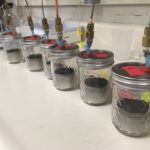
Understanding the role of microbial diversity in soil ecosystem functioning: Reflections from a LTER Fellow
8.31.20

Grant Falvo is a PhD student in the Plant, Soil and Microbial Sciences Department at Michigan State University. He works in the Robertson lab within the disciplines of soil microbial ecology and biogeochemistry and is interested in global change phenomena broadly. There are more microorganisms in a typical handful of soil than there are people on this planet. Every year these microbes emit >5 times as much CO2 as all the fossil fuel emissions emitted by humans. Yet recent research is beginning to uncover the dominant role these microbes play in stabilizing a similarly large

Continue reading Understanding the role of microbial diversity in soil ecosystem functioning: Reflections from a LTER Fellow

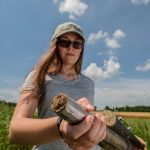
A peek at life under a wheat field: Reflections from an LTER Fellow
10.8.19

MSU graduate researcher, Allison Zahorec, is a PhD student in Dr. Doug Landis’s lab in the Department of Entomology at Michigan State University. When one envisions a typical midwestern farm, ‘biodiversity’ is hardly the first thing that comes to mind. Compared to more natural landscapes, agricultural lands can seem like ecological dead zones. Yet even the most intensively managed corn monocultures are teeming with life belowground. A few teaspoons of soil can contain over a billion individual organisms (largely microbes), and the diversity of soil-dwelling organisms is just as impre

Continue reading A peek at life under a wheat field: Reflections from an LTER Fellow

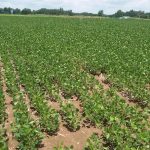
Microbial Communities in Long Term Research: Reflections from a Field Season at KBS
4.8.19

Reid Longley is a PhD candidate in the MSU Department of Microbiology & Molecular Genetics. He is a member of the Bonito Lab. Reid wrote about his research at the KBS LTER, funded by a 2018 Summer Fellowships for Long-term Ecological Research.                   Performing my field research at the W.K. Kellogg Biological Station (KBS) this summer was the first time I had ever been exposed to work in agriculture. Before coming to Michigan State for my PhD studies, I had not thought much about the amount of science that goes into

Continue reading Microbial Communities in Long Term Research: Reflections from a Field Season at KBS

Researchers conduct novel wheat microbiome analysis under four management strageties.
11.30.17

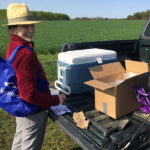
Kristi Gdanetz organizing sample collection bags before first collection of the season.

This is an original press release from American Phytopathological Society- Nov 27th, 2017 St. Paul, Minn. (November 2017)--Different crop management strategies can produce various and noticeable effects on a crop and its yield. But what are the effects at the microbial level...not just in the roots but the entire plant? Molecular biologists Kristi Gdanetz and Frances Trail of Michigan State University sought to answer that question, developing a descriptive analysis of the wheat microbiome under four common types of management strategies: conventional, no-till, organic, and reduced

Continue reading Researchers conduct novel wheat microbiome analysis under four management strageties.

Recent News and Events

  • LTER researchers collaborate with local educators to promote outdoor STEM education
  • KBS grad student earn awards for national energy research for harnessing soil microbes
  • Thirty years of data reveal major declines in lady beetles and their pest-fighting power in Midwestern farmland
  • KBS LTER graduate student receives prestigious MSU science award
  • MiSTRIPS program extends its impact beyond farm fields to classrooms and communities

Blog Categories

  • Education and Outreach News
  • Events
  • Research News

Copyright © 2026 Michigan State University Board of Trustees | East Lansing, MI | 48824

  • LEGAL
  • MSU HOME
  • SITEMAP
  • RSS
  • EMAIL