• Skip to primary navigation
  • Skip to main content
  • Skip to primary sidebar

KBS LTER

Kellogg Biological Station | Long-Term Ecological Research

  • Follow us on instagram
  • Follow us on bluesky
  • Open the Aglog
  • view current local weather
  • Home
  • ABOUT
    • KBS LTER PROGRAM
    • PROJECT HISTORY
    • LEADERSHIP
    • PEOPLE
    • LTER NETWORK
    • IN THE NEWS
  • RESEARCH
    • RESARCH AT KBS LTER
    • LONG-TERM EXPERIMENTS
    • SITE DESCRIPTION AND MAPS
      • LAND ACKNOWLEDGEMENT
      • SITE DESCRIPTION
      • SITE HISTORY
      • SOIL DESCRIPTION
      • PLOT LAYOUTS
      • THEMATIC MAPS
    • PUBLICATIONS
      • ALL PUBLICATIONS
      • PUBLICATIONS BY EXPERIMENT
      • DISSERTATIONS only
      • SYNTHESIS BOOK only
      • SPECIAL PUBLICATIONS
      • PUBLICATION DATASETS
  • DATA
    • DATA CATALOG
    • RESEARCH PROTOCOLS
    • AIRPHOTOS
    • SATELLITE IMAGERY
    • GIS DATA
    • TERMS OF USE
    • DATA SUBMISSION GUIDELINES
  • WORK WITH US
    • CONDUCTING RESEARCH
      • RESEARCH FACILITIES
      • ASSOCIATED PROJECTS
    • COLLABORATE
    • GRAD OPPORTUNITIES & FUNDING
    • NEW RESEARCHERS AND STUDENTS
    • ACKNOWLEDGEMENTS
    • JOB OPENINGS
  • PUBLIC PROGRAMS
    • K-12 PARTNERSHIP
    • DATA NUGGETS
    • MiSTRIPS
    • ARTISTS-IN-RESIDENCE
    • FIELD TRIPS AND TOURS
    • RESOURCES
  • PHOTOS
  • BLOG
  • CONTACT US

soil cores

Graduate research from the KBS LTER reveals how nematodes contribute to soil food web stability in droughts

9.11.25

Dr. Christine Sprunger and Dr. Tvisha Martin sample soil in the KBS LTER. Credit: Liz Schultheis

Using the Rainfall Exclusion Experiment (REX) within the KBS LTER, researchers found that nematode communities are more stable in early successional landscapes than agricultural ones during drought. This study highlights the importance of plant diversity for resilient soil ecosystems under environmental change. As farmers adopt new strategies to cope with increasingly extreme weather events, such as heatwaves and droughts, understanding the mechanisms behind resiliency in agricultural systems is critical. While it’s well-established that drought harms crop production, less is known about

Continue reading Graduate research from the KBS LTER reveals how nematodes contribute to soil food web stability in droughts

Drought effect on pore structure in soils: Reflections from an LTER Fellow
1.23.24

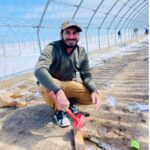
Goutham collecting soil core samples under a rainout shelter at one of the LTER sites.

Goutham Thotakuri is a graduate student in the Kravchenko lab at Michigan State University. His research is focused on the study of carbon transfer between various cover crop species and soil carbon sequestration. Recent changes to our climate dynamics have brought on alarming drought conditions in many parts of the world. Since we cannot control the climate, we need to prepare our agricultural systems for adversity.  One way to do this is through understanding the soil's hydro-physical and biochemical processes. We can identify critical factors influencing drought resilience by

Continue reading Drought effect on pore structure in soils: Reflections from an LTER Fellow

A new perspective – using bioenergy crops to alleviate global warming: Reflections from an LTER fellow
9.16.20

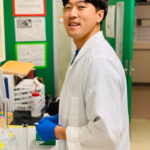
Jinho in the lab

Jinho Lee is a PhD student in the Plant, Soil and Microbial Sciences Department at Michigan State University. He works in the Kravchenko lab with interests in carbon dynamics of soil. Today we are facing one of the biggest environmental challenges that our species has never faced, and one that is caused by our own actions. Since the Industrial Revolution, the worldwide carbon dioxide (CO2) emissions have increased due to use of C-based fossil fuels. This has resulted in global warming.  To alleviate global warming and reduce the dependence on fossil fuels, several alternative

Continue reading A new perspective – using bioenergy crops to alleviate global warming: Reflections from an LTER fellow

Sidebar

Recent News and Events

  • KBS LTER scientists use machine learning to improve prediction of US cropland nitrous oxide emissions
  • Undergraduate and graduate KBS researchers show how climate warming may be a boon for native goldenrod
  • Graduate research from the KBS LTER reveals plant traits that predict ecosystem stability
  • Farmscapes to Forests: An evening with KBS LTER’s 2025 Artists-in-Residence
  • RET Melissa Frost to visit Konza LTER in cross-site synthesis effort

Blog Categories

  • Education and Outreach News
  • Events
  • Research News

Copyright © 2026 Michigan State University Board of Trustees | East Lansing, MI | 48824

  • LEGAL
  • MSU HOME
  • SITEMAP
  • RSS
  • EMAIL