• Skip to primary navigation
  • Skip to main content
  • Skip to primary sidebar

KBS LTER

Kellogg Biological Station | Long-Term Ecological Research

  • Follow us on instagram
  • Follow us on bluesky
  • Open the Aglog
  • view current local weather
  • Home
  • ABOUT
    • KBS LTER PROGRAM
    • PROJECT HISTORY
    • LEADERSHIP
    • PEOPLE
    • LTER NETWORK
    • IN THE NEWS
  • RESEARCH
    • RESARCH AT KBS LTER
    • LONG-TERM EXPERIMENTS
    • SITE DESCRIPTION AND MAPS
      • LAND ACKNOWLEDGEMENT
      • SITE DESCRIPTION
      • SITE HISTORY
      • SOIL DESCRIPTION
      • PLOT LAYOUTS
      • THEMATIC MAPS
    • PUBLICATIONS
      • ALL PUBLICATIONS
      • PUBLICATIONS BY EXPERIMENT
      • DISSERTATIONS only
      • SYNTHESIS BOOK only
      • SPECIAL PUBLICATIONS
      • PUBLICATION DATASETS
  • DATA
    • DATA CATALOG
    • RESEARCH PROTOCOLS
    • AIRPHOTOS
    • SATELLITE IMAGERY
    • GIS DATA
    • TERMS OF USE
    • DATA SUBMISSION GUIDELINES
  • WORK WITH US
    • CONDUCTING RESEARCH
      • RESEARCH FACILITIES
      • ASSOCIATED PROJECTS
    • COLLABORATE
    • GRAD OPPORTUNITIES & FUNDING
    • NEW RESEARCHERS AND STUDENTS
    • ACKNOWLEDGEMENTS
    • JOB OPENINGS
  • PUBLIC PROGRAMS
    • K-12 PARTNERSHIP
    • DATA NUGGETS
    • MiSTRIPS
    • ARTISTS-IN-RESIDENCE
    • FIELD TRIPS AND TOURS
    • RESOURCES
  • PHOTOS
  • BLOG
  • CONTACT US

insect

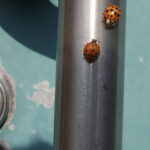
Similar invasive insects coexist through slight differences in environmental responses

3.2.23

Novel analyses of a 31-year dataset on invading ladybeetles shows that small differences in habitat preference across years allow for two similar invading species to coexist while native species decline. Invasive species lead to novel interactions Invasive species are one of the main threats to biodiversity in an increasingly interconnected world. As humans move organisms around, either purposefully or incidentally, new combinations of species have the opportunity to interact with one another. These novel interactions have the potential to affect an invader’s persistence in the

Continue reading Similar invasive insects coexist through slight differences in environmental responses

Little strips of prairie can go a long way
8.1.22

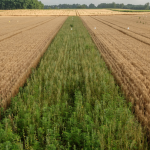
A narrow green strip of prairie runs through a wheat field.

New research out of MSU shows that it is possible to manage farmland to address two challenges simultaneously – protecting biodiversity and maintaining ecosystem services. The key is to strategically place native perennial vegetation within agricultural systems, using the innovative practice of prairie strips. Today, 38% of the landscape in the Midwest is planted in row crop agriculture. “We need to make this land habitable for species for the ecosystem services the increased biodiversity can provide to the farms” said Lindsey Kemmerling, the first author of the MSU-led study

Continue reading Little strips of prairie can go a long way

Transforming Michigan’s agricultural landscapes – Do prairie strips diversify insect communities in squash production?: Reflections from an LTER Fellow
6.16.22

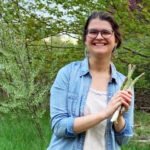
Jen Zavalnitskaya is a graduate student in Zsofia Szendrei's lab in Michigan State University's Department of Entomology. Her research interests include plant-insect interactions, insect behavior, integrated pest management, and agroecology By the time I began my PhD, I knew I was passionate about promoting the biodiversity of agricultural landscapes. From my masters research in Zsofia Szendrei’s lab, I learned that the ways farmers manage their fields plays an important part in insect pest dynamics. However, the local landscape plays a large role as well. This creates a challenge,

Continue reading Transforming Michigan’s agricultural landscapes – Do prairie strips diversify insect communities in squash production?: Reflections from an LTER Fellow

Insect vacuum on the KBS LTER helps serve as an early warning system
2.4.14

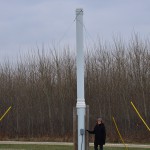
The insect vacuum on the Kellogg Biological Station Long-term Ecological Research (KBS LTER) site. Photo credit: Bill Krasean, KBS LTER volunteer.

By Bill Krasean, retired journalist and KBS LTER volunteer Every Friday mid-May through mid-October, a staff member at Kellogg Biological Station (KBS) Long-term Ecological Research (LTER) program drives to a tall, narrow pipe on the main experiment site, opens a small door at the base of the tower and extracts a bottle filled with liquid and a cornucopia of insects. The little critters, victims of a strong suction at the top of the pole as they fly by, are shipped to the University of Illinois where Dr. David J. Voegtlin and Dr. Doris Lagos, experts in the identification of aphids,

Continue reading Insect vacuum on the KBS LTER helps serve as an early warning system

Sidebar

Recent News and Events

  • KBS LTER scientists use machine learning to improve prediction of US cropland nitrous oxide emissions
  • Undergraduate and graduate KBS researchers show how climate warming may be a boon for native goldenrod
  • Graduate research from the KBS LTER reveals plant traits that predict ecosystem stability
  • Farmscapes to Forests: An evening with KBS LTER’s 2025 Artists-in-Residence
  • RET Melissa Frost to visit Konza LTER in cross-site synthesis effort

Blog Categories

  • Education and Outreach News
  • Events
  • Research News

Copyright © 2026 Michigan State University Board of Trustees | East Lansing, MI | 48824

  • LEGAL
  • MSU HOME
  • SITEMAP
  • RSS
  • EMAIL