


At the end of last October, the W.K. Kellogg Biological Station was thrilled to welcome Kensington Woods, or K-Wood, Schools back for a second year of field-based ecological exploration. K-Woods, a charter school in Livingston, Michigan, prides itself on its small, supportive community and its STEAM-focused approach that shows students how creativity and science go hand in hand. That same blend of creativity and scientific curiosity is central to our work at KBS, making this partnership the perfect match. This year, however, we had something new to look forward to: along with returning biology
students
Similar invasive insects coexist through slight differences in environmental responses
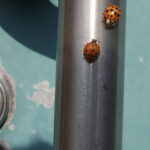
Novel analyses of a 31-year dataset on invading ladybeetles shows that small differences in habitat preference across years allow for two similar invading species to coexist while native species decline. Invasive species lead to novel interactions Invasive species are one of the main threats to biodiversity in an increasingly interconnected world. As humans move organisms around, either purposefully or incidentally, new combinations of species have the opportunity to interact with one another. These novel interactions have the potential to affect an invader’s persistence in the
“Cream of the crop” – LTER research in FUTURES magazine
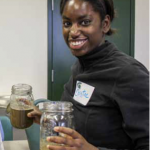
KBS LTER scientists were recently featured in the latest issue of MSU's AgBioResearch FUTURES magazine. The article begins, "Like most students at the Michigan State University (MSU) W. K. Kellogg Biological Station (KBS), which is renowned for advancements in ecological science and evolutionary biology, Christine Sprunger arrived eager to roll up her sleeves and get her hands dirty — literally. “When I took my first soils class as a sophomore at the University of Washington, I just kind of fell in love with the topic,” said Sprunger, now pursuing a dual doctoral degree in crop and soil
Data Nuggets: small activities with big impacts for students
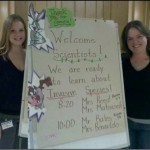
Guest blog post by Kellogg Biological Station (KBS) graduate students Liz Schultheis and Melissa Kjelvik The landscape of science education is undergoing a fundamental shift. Updated standards, to be followed by all science teachers in Michigan, emphasize that science is an active process: instead of the memorization of facts in textbooks, students should be taught the ability to generate new knowledge by testing hypotheses and interpreting data. In other words, students should be taught how to use the scientific method and make arguments from evidence. However, with the scientific method
LTER Math Science Partnership in its final year

For the last five years, KBS K-12 Partnership teachers have been participating in a unique program that involves teachers, scientists, and educators at four LTER sites around the country. The goal is to promote environmental science literacy through the frame of learning progressions. In other words, the project has conducted research about how students make sense of important environmental issues and used that research to help teachers work more effectively with their students about these issues. This program – the LTER Math Science Partnership (MSP) – is a collaboration between four LTER
Undergraduates conduct biofuel sustainability research at KBS
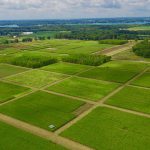
Cait Gallagher and Tamira Vojnar had the unique experience of gaining hands-on research experience as undergraduates at the KBS LTER this summer. Gallagher and Vojnar were part of the Research Experience for Undergraduates (REU) program that brings undergraduate students from across the country to KBS every summer. The ten-week REU program was funded by the Department of Energy through the Great Lakes Bioenergy Research Center (GLBRC). Gallagher, a senior at the University of Illinois at Urbana-Champaign, and Vojnar, a junior at Bowdoin College in Maine, were at KBS from May through early